





WE Metalworks logo with manufacturing and surface finishing tagline
CNC MACHINING

CNC Machining for Custom Metal Parts

Custom CNC machining for aluminum, stainless steel, carbon steel, brass and other engineering metals, supporting prototypes, low-volume parts and repeat production with coordinated surface finishing.

CNC Milling CNC Turning 4-Axis Machining Custom Metal Parts Surface Finishing
CNC MACHINING OVERVIEW

Precision CNC Machining for Custom Metal Components

We manufacture custom CNC machined components from aluminum, stainless steel, carbon steel, brass and other engineering metals for prototypes, low-volume orders and repeat production.

CNC milling, turning and 4-axis machining are selected according to part geometry, tolerance requirements and production quantity. Secondary operations and surface finishing can be coordinated around the final condition of the component.

01
Precision Geometry

Machined features, bores, threads, pockets and functional surfaces are produced according to drawing requirements.

02
Flexible Production

CNC machining supports prototypes, low-volume parts and repeat production without dedicated forming tooling.

03
Downstream Coordination

Deburring, inspection and surface finishing can be planned together with the machining process.

MACHINING REVIEW

Critical dimensions, datum references, surface-finish requirements and downstream coatings should be identified before the machining route is confirmed.
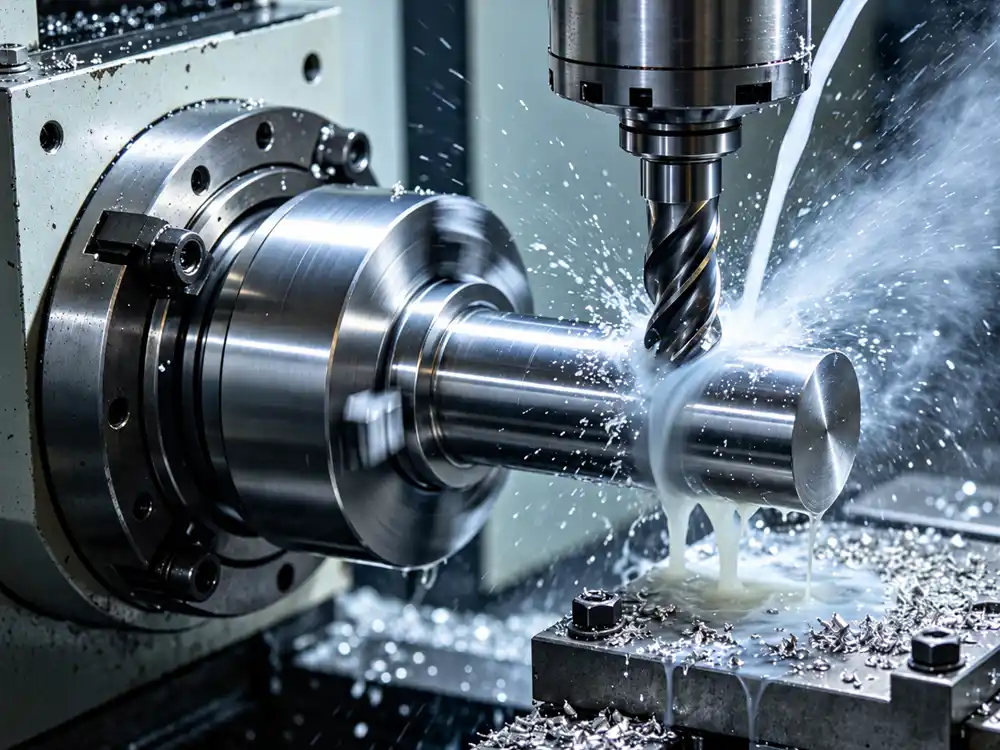
CNC turn-mill machining process for a custom metal part
CNC MACHINING CAPABILITIES

CNC Machining Processes for Different Part Geometries

Different CNC machining methods are selected according to part geometry, feature orientation, rotational symmetry and the number of machining operations required.

Milling, turning, 4-axis machining and turn-mill processing can be used independently or combined depending on the structure and production requirements of the component.

01 PRISMATIC COMPONENTS

CNC Milling

CNC milling is suited to custom parts with flat surfaces, pockets, bores, slots, threaded features and complex machined geometry across multiple faces.

Typical Parts Housings · Plates · Brackets · Fixtures · Machined Blocks
Best Fit Multi-feature parts requiring controlled surfaces and dimensional relationships.
02 ROTATIONAL COMPONENTS

CNC Turning

CNC turning is used for rotational components requiring controlled diameters, shoulders, grooves, threads, tapers and concentric machined features.

Typical Parts Shafts · Bushings · Pins · Fittings · Sleeves
Best Fit Round components where concentricity and turned geometry define the primary part structure.
03 MULTI-SIDE MACHINING

4-Axis Machining

4-axis machining adds controlled rotary positioning to standard milling, allowing features on multiple sides of a component to be machined with fewer manual repositioning steps.

Typical Parts Multi-Side Housings · Cylindrical Bodies · Fixtures · Complex Blocks
Best Fit Components with features distributed around several faces or around a rotational axis.
04 COMBINED MACHINING

Turn-Mill Machining

Turn-mill machining combines turning and milling operations for rotational parts that also require flats, cross holes, slots or other non-rotational features.

Typical Parts Precision Shafts · Fittings · Connectors · Valve Components
Best Fit Turned components requiring additional milled features within a coordinated machining sequence.
PROCESS SELECTION

The machining route should be selected around the complete part, including feature orientation, datum strategy, tolerance relationships and the number of setups required to reach the finished geometry.

MATERIALS & PART REQUIREMENTS

Materials and Design Requirements for CNC Machined Parts

Material selection, part geometry and tolerance requirements all influence the CNC machining route. Tool access, wall thickness, hole depth, datum strategy and downstream finishing should be reviewed together before production.

We machine commonly specified engineering metals including aluminum, stainless steel, carbon steel and brass, with other materials reviewed according to drawing and project requirements.

COMMON MATERIALS

Metals Commonly Used for CNC Machining

01
Aluminum

Widely used for lightweight housings, brackets, structural components and precision parts requiring efficient machining and optional anodizing or conversion treatment.

02
Stainless Steel

Selected for components requiring corrosion resistance, mechanical strength and controlled machined features before passivation, electropolishing or other finishing.

03
Carbon & Alloy Steel

Used for mechanical and structural parts requiring strength, wear performance or subsequent plating, coating or other specified surface treatment.

04
Brass

Suitable for fittings, connectors, bushings and precision components requiring good machinability and detailed dimensional features.

ENGINEERING CONSIDERATIONS

Part Features That Affect the Machining Route

01
Tolerances & Datum Strategy

Critical tolerances should be concentrated on functional dimensions and referenced to clearly defined datums where possible.

02
Tool Access & Feature Orientation

Deep pockets, side holes and features distributed across multiple faces can affect setup count, tool access and axis selection.

03
Thin Walls & Deep Features

Thin sections, high aspect-ratio features and deep cavities may require additional control to reduce deformation, vibration and machining instability.

04
Holes, Threads & Precision Fits

Hole depth, thread type, mating diameters and precision interfaces should be defined according to the final assembly requirement.

05
Surface Finishing Allowance

Anodizing, plating, electropolishing and other finishing processes can affect dimensions, masking areas and final surface condition.

MATERIAL CONFIRMATION

Material grade, heat-treatment condition and any permitted substitutions should be confirmed before production when these factors affect machining, performance or downstream surface finishing.

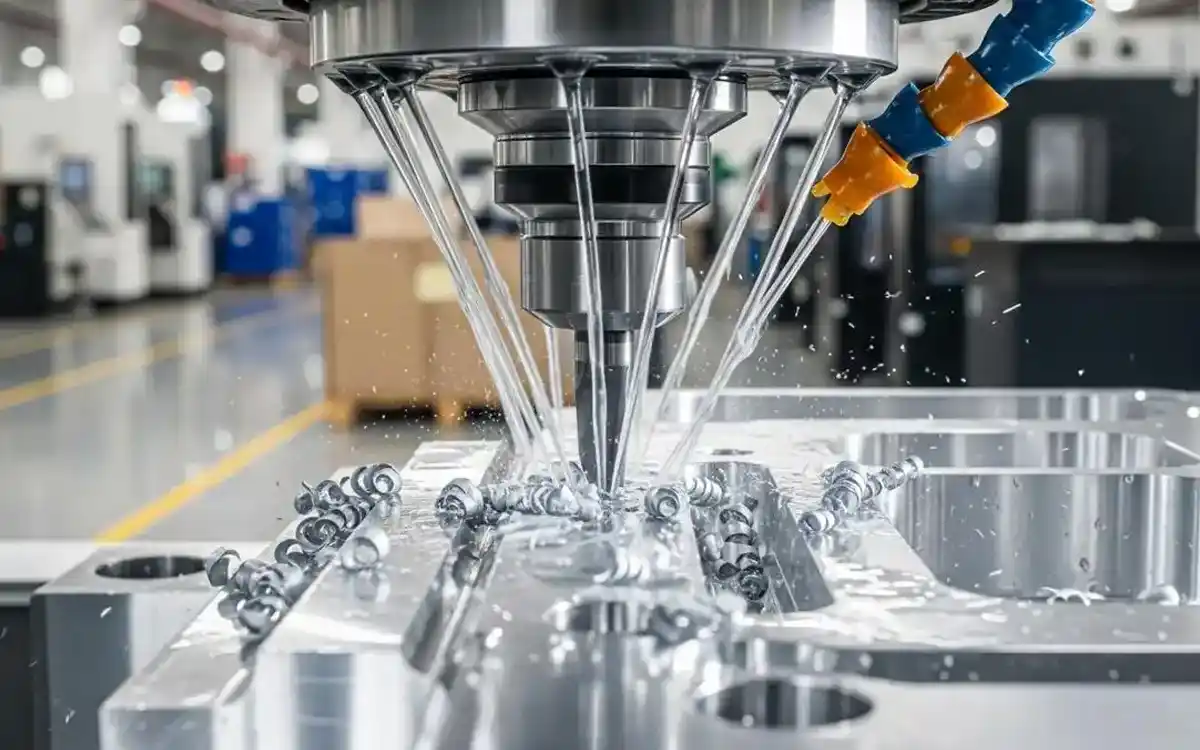
CNC machining process for custom metal parts with precision milling
INTEGRATED PRODUCTION

From CNC Machining to Finished Metal Parts

CNC machining is often only one stage of the finished component. Deburring, drilling, tapping, cleaning, surface finishing, inspection and packaging may all need to be coordinated around the final drawing and application requirements.

By reviewing downstream operations before machining begins, critical dimensions, threads, sealing faces, cosmetic areas and coating allowances can be controlled before the part moves to the next production stage.

01
CNC Machining

Milling, turning, 4-axis or turn-mill operations are selected according to the part geometry and tolerance requirements.

02
Secondary Operations

Deburring, drilling, tapping, reaming and other follow-up operations can be coordinated after primary machining.

03
Surface Finishing

Anodizing, plating, passivation, PVD, electropolishing and mechanical finishing can be integrated where required.

04
Inspection & Packaging

Finished parts are checked against confirmed requirements before protective packaging and shipment.

PRODUCTION COORDINATION

Surface finishing, masking and final inspection requirements should be considered before machining is released, especially where coating thickness or protected functional surfaces affect finished dimensions.

CMM inspection of a CNC machined metal part for dimensional quality control
TOLERANCE & QUALITY

Dimensional Control for CNC Machined Parts

CNC machining quality depends on more than individual dimensions. Datum relationships, feature position, mating surfaces, threads and finished surface requirements should be reviewed together with the complete drawing.

Inspection methods are selected according to part geometry and critical characteristics, with dimensional verification incorporated into the production process where required.

01
Drawing-Based Tolerance Review

Critical dimensions and tolerance relationships are reviewed against the drawing before the machining route is finalized.

02
Datum & Feature Relationships

Datum references, hole positions, bores, shoulders and mating features are considered as a coordinated dimensional system.

03
Surface & Functional Areas

Surface condition, sealing faces, precision fits and other functional areas are identified separately from general non-critical surfaces.

04
Dimensional Inspection

CMM inspection can use custom locating fixtures, including 3D-printed bases, to position parts consistently while probe measurement verifies critical dimensions and feature relationships.

INSPECTION BASIS

Final inspection should follow the confirmed drawing, material, critical dimensions and surface-finish requirements. Where special measurement reports or inspection documentation are required, these should be identified during quotation review.

TYPICAL CNC PARTS

Typical CNC Machined Parts We Support

CNC machining can support a wide range of custom metal components, from prismatic housings and brackets to rotational shafts, bushings and fittings.

The machining route is selected according to part geometry, feature orientation, tolerance requirements and downstream finishing needs.

01 PRISMATIC PARTS

Housings & Bodies

Custom housings, enclosures and structural bodies with pockets, bores, mounting faces, threaded holes and controlled mating surfaces.

TYPICAL ROUTE CNC Milling · 4-Axis Machining
02 ROTATIONAL PARTS

Shafts & Pins

Rotational components with controlled diameters, shoulders, grooves, threads, cross holes and other functional features.

TYPICAL ROUTE CNC Turning · Turn-Mill Machining
03 PRECISION FIT PARTS

Bushings & Sleeves

Cylindrical components with internal and external diameters, shoulders, grooves and mating surfaces for mechanical assemblies.

TYPICAL ROUTE CNC Turning · Secondary Machining
04 CONNECTION PARTS

Fittings & Connectors

Machined fittings and connectors requiring threads, sealing surfaces, wrench flats, bores and cross features.

TYPICAL ROUTE CNC Turning · Turn-Mill Machining
05 STRUCTURAL PARTS

Brackets & Plates

Custom brackets, mounting plates and structural components with holes, slots, pockets, counterbores and machined reference surfaces.

TYPICAL ROUTE CNC Milling · Multi-Side Machining
06 FUNCTIONAL COMPONENTS

Valve & Mechanical Components

Functional machined components combining bores, threads, sealing areas, precision interfaces and multiple feature orientations.

TYPICAL ROUTE Milling · Turning · Turn-Mill
CUSTOM PART REVIEW

These examples are representative rather than limiting. Custom CNC parts can be reviewed from drawings or CAD files according to geometry, material, tolerance, quantity and surface-finish requirements.

CNC QUOTATION REQUIREMENTS

What to Send for a CNC Machining Quote

A clear drawing or CAD file together with material, quantity, tolerance and finishing requirements helps us review the machining route and prepare a more accurate quotation.

If some specifications are still under development, send the available information first and identify any dimensions or features that require further engineering review.

01
Drawing or CAD File

Provide the latest 2D drawing, 3D model or available technical documentation for the part.

02
Material

Specify the required alloy or material grade, including any heat-treatment condition where applicable.

03
Dimensions & Tolerances

Identify critical dimensions, fits, geometric tolerances and datum requirements that affect the function of the component.

04
Quantity

Provide prototype, initial order and expected repeat-production quantities where available.

05
Surface Finish

Specify anodizing, plating, passivation, electropolishing, mechanical finishing or other required surface treatment.

06
Application & Special Requirements

Include assembly conditions, cosmetic surfaces, masking areas, inspection documents or other project-specific requirements.

RFQ REVIEW

Complete information is preferred, but an initial review can also begin from partial drawings or project requirements before all production details are finalized.

READY TO REVIEW YOUR CNC PARTS?

Need a CNC Machining Quote?

Send us your drawings, material, quantity, tolerance and finishing requirements. We can review the suitable machining route and prepare a project-specific quotation.