



WE Metalworks logo with manufacturing and surface finishing tagline
LASER CUTTING

Laser Cutting for Custom Sheet Metal Parts

Precision laser cutting for stainless steel, carbon steel, aluminum and other sheet metals, supporting custom profiles, panels, brackets and fabricated components with coordinated secondary operations and surface finishing.

Laser Cutting • Custom Sheet Metal • Precision Profiles • Secondary Operations • Surface Finishing
LASER CUTTING OVERVIEW

Precision Laser Cutting for Custom Sheet Metal Parts

We provide custom laser cutting for stainless steel, carbon steel, aluminum and other sheet metals used in panels, brackets, covers, enclosures and fabricated metal components.

The cutting route is selected according to material, sheet thickness, part geometry, hole and slot features, edge requirements and the downstream fabrication process required for the finished component.

01
Precision Profiles

Custom contours, holes, slots and internal features can be cut directly from sheet according to drawing geometry.

02
Flexible Sheet Metal Production

Laser cutting supports prototypes, low-volume orders and repeat production without dedicated blanking tooling.

03
Ready for Downstream Fabrication

Cut parts can move into deburring, grooving, bending, welding and surface finishing according to the final part requirement.

CUTTING REVIEW

Material grade, sheet thickness, minimum feature size, edge requirements and downstream forming operations should be reviewed before the cutting route is confirmed.
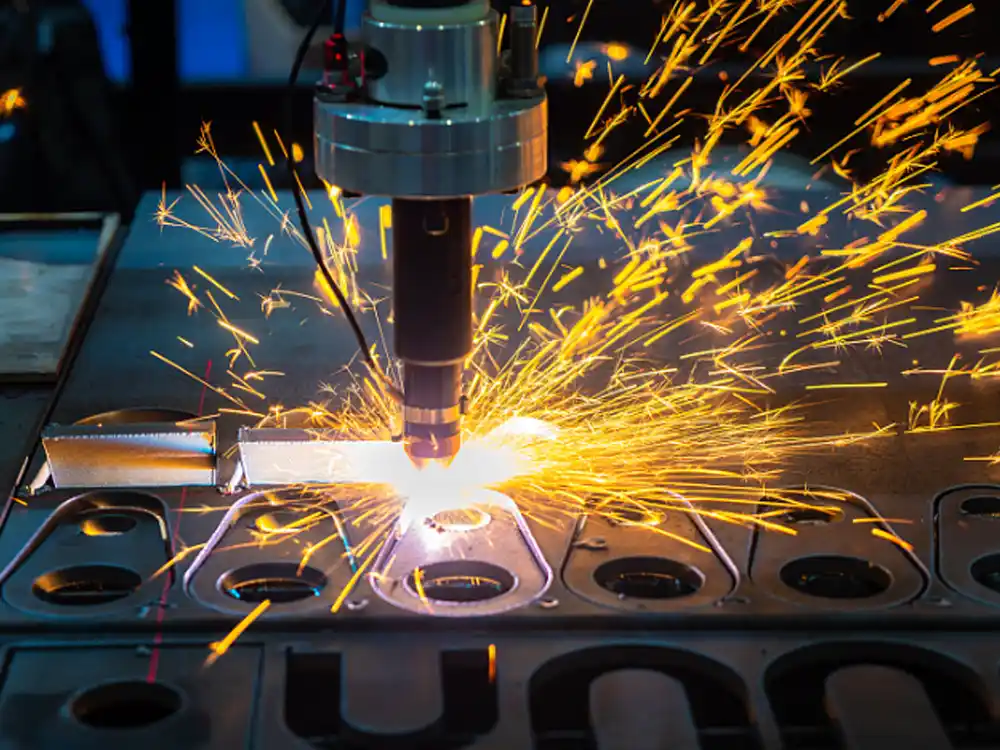
Laser cutting process for custom sheet metal parts on a cutting table
LASER CUTTING CAPABILITIES

Laser Cutting Capabilities for Custom Sheet Metal Parts

Laser cutting is suited to sheet metal components requiring controlled external profiles, internal cutouts, holes, slots and repeated geometric features directly from CAD data.

Cutting strategy is selected according to material, sheet thickness, feature geometry, edge requirements and the downstream fabrication process planned for the finished part.

01 EXTERNAL PROFILES

Profile & Contour Cutting

External contours can be cut directly from sheet for brackets, panels, covers, plates and other custom components with straight, curved or combined profile geometry.

Typical Features Outer Profiles · Curves · Corners · Tabs · Custom Shapes
Best Fit Custom sheet parts requiring flexible geometry without dedicated blanking tooling.
02 INTERNAL FEATURES

Holes, Slots & Cutouts

Internal openings can be integrated into the same cutting program, including holes, slots, ventilation patterns, access openings and other functional cut features.

Typical Features Holes · Slots · Windows · Openings · Vent Patterns
Best Fit Panels and fabricated parts containing multiple internal features within a single sheet profile.
03 COMPLEX GEOMETRY

Complex Sheet Geometry

CAD-driven cutting supports irregular profiles and repeated geometric details that would be difficult or inefficient to produce with conventional manual cutting methods.

Typical Parts Custom Panels · Machine Guards · Mounting Plates · Covers
Best Fit Parts combining multiple profile directions, openings and detailed sheet geometry.
04 REPEAT PRODUCTION

Nesting & Repeat Cutting

Multiple parts can be arranged across sheet material to support efficient material use and consistent repeat cutting for batch production.

Production Focus Sheet Nesting · Batch Cutting · Repeat Geometry · Material Use
Best Fit Projects requiring repeated profiles or multiple part numbers cut from common sheet stock.
CUTTING STRATEGY

Part spacing, pierce locations, heat distribution, feature size and downstream bending or welding requirements should be considered when preparing the cutting layout and production sequence.

MATERIALS & PART REQUIREMENTS

Materials and Design Requirements for Laser Cut Sheet Metal Parts

Material type, sheet thickness and feature geometry all influence the laser cutting process. Hole size, narrow slots, corner details and heat concentration should be reviewed together with the final part requirements.

Downstream operations such as deburring, bending, welding and surface finishing should also be considered before the cutting layout is finalized.

COMMON SHEET METALS

Materials Commonly Used for Laser Cutting

01
Stainless Steel

Used for panels, covers, enclosures and fabricated components requiring corrosion resistance, clean appearance and optional downstream finishing.

02
Carbon Steel

Common for structural brackets, frames, machine components and fabricated parts that may later be welded, coated, plated or painted.

03
Aluminum

Selected for lightweight panels, covers, brackets and fabricated assemblies where reduced weight and optional anodizing are required.

04
Other Sheet Metals

Other metallic sheet materials can be reviewed according to material grade, thickness, cutting behavior and project requirements.

ENGINEERING CONSIDERATIONS

Part Features That Affect the Cutting Route

01
Material & Sheet Thickness

Material grade and thickness influence cutting parameters, heat input, edge condition and overall process selection.

02
Holes, Slots & Small Features

Small holes, narrow slots and closely spaced features should be reviewed in relation to material thickness and surrounding geometry.

03
Edge & Heat Considerations

Cut-edge requirements, piercing locations and concentrated heat around detailed geometry can affect the final condition of the sheet part.

04
Bend Lines & Forming Allowance

Bend position, bend relief and required forming allowance should be coordinated with the flat pattern before cutting.

05
Surface & Cosmetic Requirements

Visible surfaces, protective film, grain direction and downstream finishing requirements should be identified before production where they affect part orientation.

FLAT-PATTERN REVIEW

Where laser-cut blanks will be bent or welded afterward, the flat pattern should be reviewed together with bend locations, relief features, mating edges and finished-part dimensions before cutting.

Laser cutting process for custom sheet metal parts with precision sheet metal cutting
INTEGRATED PRODUCTION

From Laser-Cut Blanks to Finished Sheet Metal Parts

Laser cutting is often the first stage of a fabricated sheet metal component. Deburring, grooving, bending, welding and surface finishing can be coordinated around the final geometry and appearance required for the finished part.

Reviewing these downstream operations before cutting helps coordinate flat-pattern dimensions, bend locations, mating edges, cosmetic surfaces and finishing requirements across the production route.

01
Laser Cutting

Profiles, holes, slots and other cut features are produced from the confirmed flat pattern and sheet material.

02
Deburring & Edge Preparation

Cut edges can be deburred, cleaned or prepared before parts move into forming, welding or finishing operations.

03
V-Grooving & Bending

Where a sharper bend line, smaller bend radius or cleaner exterior corner is required, V-grooving can be applied before bending where appropriate.

04
Welding & Assembly

Formed parts can be welded or assembled where the final component requires joined panels, frames or fabricated structures.

05
Surface Finishing

Mechanical finishing, plating, passivation, anodizing and other specified finishes can be coordinated after fabrication.

06
Inspection & Packaging

Finished components are checked against confirmed dimensional, forming and surface requirements before protective packaging.

FABRICATION PLANNING

Bend sequence, grooving requirements, weld locations and surface finishing should be considered before the flat pattern is released for cutting, particularly where finished dimensions or cosmetic surfaces are critical.

Request a Quote
Vision measurement inspection of laser cut sheet metal parts for dimensional quality control
QUALITY & DIMENSIONAL CONTROL

Dimensional Inspection for Laser Cut Sheet Metal Parts

Laser-cut components should be checked against the confirmed drawing before they move into bending, welding or final assembly. Profile dimensions, holes, slots and feature positions can be verified according to the geometry and inspection requirements of the part.

Optical and vision measurement methods are especially useful for flat sheet components and two-dimensional features, while formed dimensions, bend angles and fabricated geometry are checked with suitable measuring tools or fixtures where required.

01
Profile & Overall Dimensions

External contours and overall part dimensions are checked against the released drawing before downstream fabrication.

02
Holes, Slots & Feature Position

Hole size, slot geometry, spacing and relative feature position can be verified using optical or other suitable measurement methods.

03
Edge & Surface Condition

Cut edges, burr condition, visible surfaces and areas intended for bending or welding are reviewed before the next production stage.

04
Formed & Fabricated Geometry

Bend angles, formed dimensions and welded assemblies can be checked with appropriate gauges, measuring tools or fixtures according to the finished-part requirement.

INSPECTION BASIS

Inspection should follow the confirmed drawing, material, critical features and finished-part requirements. Any special measurement reports, cosmetic criteria or inspection documentation should be identified during quotation review.

TYPICAL LASER CUT PARTS

Typical Sheet Metal Parts We Support

Laser cutting supports a wide range of custom sheet metal parts, from simple brackets and mounting plates to formed enclosures, guards and fabricated assemblies.

The production route is selected according to flat-pattern geometry, material, forming requirements, joining operations and the final surface condition of the component.

01 MOUNTING COMPONENTS

Brackets & Mounting Plates

Custom brackets and mounting plates with holes, slots, tabs, relief features and profiles prepared for direct use or downstream forming.

TYPICAL ROUTE Laser Cutting · Deburring · Bending
02 SHEET METAL PANELS

Panels, Covers & Faceplates

Flat or formed sheet components with openings, ventilation patterns, mounting features and visible exterior surfaces.

TYPICAL ROUTE Laser Cutting · Bending · Surface Finishing
03 FORMED ENCLOSURES

Enclosures & Chassis

Sheet metal housings and chassis combining cutouts, bend lines, fastening features and joined sections for equipment and electrical assemblies.

TYPICAL ROUTE Laser Cutting · Bending · Welding
04 PROTECTIVE COMPONENTS

Guards, Screens & Vent Panels

Machine guards, protective panels and ventilated components containing repeated openings, cut patterns and formed edges.

TYPICAL ROUTE Laser Cutting · Pattern Cutting · Bending
05 STRUCTURAL SHEET PARTS

Gussets, Tabs & Structural Plates

Cut structural components used for reinforcement, joining, mounting and welded fabrication within frames, machinery and industrial assemblies.

TYPICAL ROUTE Laser Cutting · Edge Preparation · Welding
06 FABRICATED ASSEMBLIES

Formed & Welded Assemblies

Multi-part sheet metal assemblies combining laser-cut blanks, formed sections, welded joints and finished surfaces into a complete fabricated component.

TYPICAL ROUTE Cutting · Forming · Welding · Finishing
CUSTOM PART REVIEW

These examples are representative rather than limiting. Custom sheet metal parts can be reviewed from drawings or CAD files according to material, thickness, geometry, quantity, forming requirements and surface finish.

LASER CUTTING QUOTATION REQUIREMENTS

What to Send for a Laser Cutting Quote

A clear drawing or CAD file together with material, sheet thickness, quantity and downstream fabrication requirements helps us review the cutting route and prepare a more accurate quotation.

If the part will be bent, welded or surface finished after cutting, those requirements should be identified during the initial review.

01
Drawing or CAD File

Provide the latest 2D drawing, DXF, DWG, STEP file or other available technical documentation for the sheet metal part.

02
Material & Sheet Thickness

Specify the required material grade and sheet thickness so the cutting process can be reviewed against the part geometry.

03
Dimensions & Critical Features

Identify important hole sizes, slot dimensions, profile tolerances and feature positions that affect fit or assembly.

04
Quantity

Provide prototype, initial production and expected repeat-order quantities where available.

05
Bending, Welding & Secondary Operations

Identify any deburring, V-grooving, bending, welding or assembly requirements that follow the laser cutting process.

06
Surface Finish & Cosmetic Requirements

Specify coating, plating, passivation, anodizing, brushing or other finishing requirements, including visible or protected areas.

RFQ REVIEW

Complete production drawings are preferred, but an initial review can also begin from available CAD data, sketches or project requirements before all fabrication details are finalized.

READY TO REVIEW YOUR SHEET METAL PARTS?

Need a Laser Cutting Quote?

Send us your drawings, material, sheet thickness, quantity and fabrication requirements. We can review the suitable cutting and downstream production route and prepare a project-specific quotation.