





Forging for Custom Metal Parts
Custom forging for steel and other suitable metals, supporting high-strength components, repeat production and coordinated machining, heat treatment, surface finishing and inspection.
Forging for High-Strength Metal Components
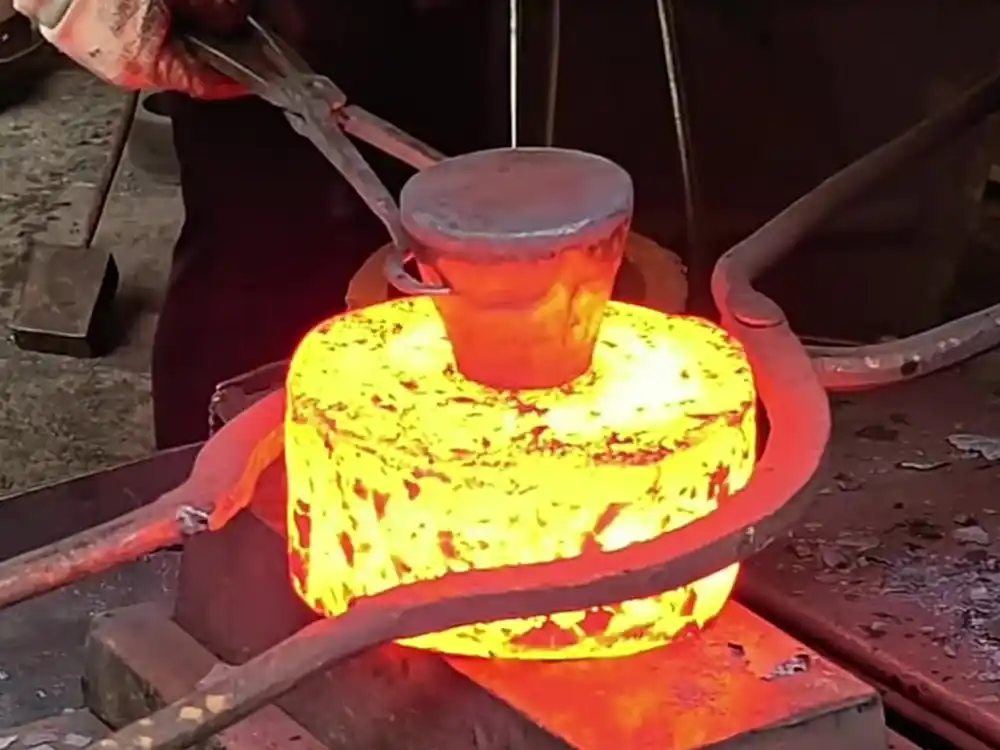
Forging shapes heated metal through controlled compressive force, producing components with refined material flow and mechanical properties suited to demanding structural and mechanical applications.
The process is commonly used for steel and other suitable metals where strength, fatigue resistance, impact performance and repeat production are important to the finished part.
Forging is well suited to parts that must withstand mechanical loading, impact, fatigue and repeated service conditions.
Material is plastically formed under pressure, allowing the component geometry and internal grain flow to develop around the forged shape.
Forged parts can proceed to heat treatment, CNC machining, deburring, surface finishing and inspection according to the final dimensional and application requirements.
Material grade, billet size, part geometry, forging allowance, heat-treatment requirements, machining areas and expected production volume should be reviewed before the forging route is confirmed.
Forging Capabilities for Custom Metal Components
Forging uses controlled deformation to shape heated metal into components designed for strength, repeat production and demanding mechanical applications.
Material grade, billet size, part geometry, forging allowance, tooling requirements and downstream machining should be reviewed together before the production route is confirmed.
Hot Forging
Metal is heated to a suitable forging temperature and formed under compressive force to produce strong components with controlled material flow and repeatable geometry.
Shaped Forged Components
Forging can produce shaped components with stepped sections, flanges, bosses and other functional forms that reduce the amount of material removed during later machining.
Forged Blanks & Preforms
Forged blanks and preforms can be produced close to the required component shape before CNC machining creates final holes, threads, bearing surfaces and precision interfaces.
Custom Tooling & Repeat Production
Tooling and production setup can be developed around the approved forged geometry, material and expected volume to support consistent production across repeat orders.
Material grade, forged shape, section changes, tooling requirements, heat treatment, machining allowance and expected production quantity should be reviewed together before the forging process is finalized.
Materials and Design Requirements for Forged Metal Parts
Material grade, billet condition and part geometry all influence forging temperature, material flow, tooling requirements and the downstream heat-treatment and machining route.
Section changes, transitions, machining stock and critical mechanical requirements should be reviewed before the forging process and production allowance are finalized.
Metals Commonly Used for Forged Components
Commonly used for structural and mechanical forged parts requiring strength, toughness and reliable repeat production.
Selected for components requiring higher strength, fatigue resistance, hardenability or other performance characteristics after heat treatment.
Suitable for forged components requiring corrosion resistance, mechanical strength and service performance in demanding operating environments.
Other suitable metals can be reviewed according to the required mechanical properties, forged geometry, production quantity and downstream processing requirements.
Part Features That Affect the Forging Route
Starting stock size, material grade and condition influence heating, deformation sequence and the amount of material required to form the forged component.
Abrupt changes in section should be reviewed carefully so material flow, local deformation and forged geometry can be controlled during forming.
Suitable radii and transitions help support material flow and reduce unnecessary concentration of deformation around sharp geometric changes.
Bearing seats, sealing faces, holes, threads and other precision areas should include suitable stock where final CNC machining is required after forging.
Required strength, hardness, toughness or other mechanical properties should be identified early so forging and subsequent heat treatment can be planned together.
Final process planning should be based on the complete drawing, material specification, forged geometry, machining allowance, heat-treatment requirements, critical mechanical properties and expected production volume.
From Heated Billet to Finished Forged Parts
Forging production extends beyond the forming operation itself. Billet preparation, heating, trimming, heat treatment, machining, surface finishing and inspection should be coordinated around the final component requirements.
Reviewing the complete manufacturing route before repeat production helps control forged geometry, machining stock, mechanical properties and the final condition required for assembly or shipment.
Starting material is prepared to the required billet size and heated to a suitable forging temperature before controlled deformation begins.
Heated material is formed under compressive force according to the required component geometry, tooling and forming sequence.
Excess material, flash and scale can be removed as required before the forged component proceeds to heat treatment, machining or further processing.
Heat treatment can be coordinated according to the specified material grade, hardness, strength, toughness and final mechanical-property requirements.
Precision interfaces, holes, threads, bearing surfaces and other critical features can be machined before the specified surface treatment or protective finish is applied.
Finished parts are checked against confirmed dimensional, material and surface requirements before protective packaging and shipment.
Material grade, forging allowance, heat treatment, machining areas and surface finishing should be reviewed together before repeat production is released.
Inspection Control for Forged Metal Parts
Forged components should be inspected against confirmed dimensional, material and mechanical requirements before they proceed to final finishing, assembly or shipment.
Inspection methods can combine dimensional measurement, surface examination, hardness verification and non-destructive testing according to the material, forged geometry and application requirements.
Critical dimensions, forged geometry, machining stock and datum relationships can be checked against the approved drawing and inspection requirements.
Forged surfaces, trimmed areas, transitions and visible features can be reviewed for cracks, laps, scale-related damage and other conditions that may affect downstream processing.
For ferromagnetic forged components, fluorescent magnetic particle inspection can be used where required to identify surface and near-surface discontinuities.
Hardness and critical machined features can be checked where heat treatment or secondary CNC machining forms part of the finished component specification.
Inspection methods should follow the confirmed drawing, material specification, heat-treatment condition, critical dimensions and application requirements. Non-destructive testing is selected where required by the part specification.
Typical Forged Metal Parts We Support
Forging is commonly used for structural and mechanical components where strength, toughness, fatigue resistance and reliable material performance are important.
Forged parts can be supplied as near-net-shape components or coordinated with heat treatment, CNC machining, surface finishing and inspection according to the final application.
Shafts & Axles
Forged shafts and axle components for mechanical systems requiring strength, fatigue resistance and controlled material flow through loaded sections.
Flanges & Hubs
Forged flanges, hubs and connection bodies with stepped sections, shoulders and machining stock for mounting and power-transmission applications.
Gear Blanks & Forged Discs
Forged blanks and disc-shaped preforms produced with sufficient machining stock for subsequent gear cutting, turning or other precision machining operations.
Yokes, Forks & Lever Parts
Shaped forged components with branches, bosses and reinforced sections for mechanical linkage and load-bearing applications.
Structural & Heavy-Duty Parts
Forged structural components for applications where repeated loads, impact resistance and dependable mechanical properties are required.
Custom Forged Blanks & Preforms
Custom forged preforms can be developed around the finished part geometry to provide appropriate material distribution and machining allowance before final processing.
These examples are representative rather than limiting. Custom forged components can be reviewed from drawings or CAD files according to material grade, geometry, mechanical requirements, machining allowance, heat treatment and expected production volume.
What to Send for a Forging Quote
A clear drawing or CAD model together with material grade, quantity, machining allowance and mechanical requirements helps us review the forging route, tooling approach and downstream processing.
For repeat-production projects, expected order volume and annual demand should also be identified so production planning, tooling and process requirements can be evaluated appropriately.
Provide the latest 2D drawing, 3D model or other available technical documentation showing the finished component geometry.
Specify the required carbon steel, alloy steel, stainless steel or other forgeable material grade together with any applicable material specification.
Identify finished dimensions, critical sections, machined interfaces and areas where suitable forging stock should be retained for final CNC machining.
Provide initial order quantity, repeat-order expectations and estimated annual demand so tooling and production planning can be reviewed correctly.
Specify required hardness, strength, toughness, heat-treatment condition or other mechanical-property requirements where applicable.
Identify non-destructive testing, dimensional inspection, surface finishing, coating, documentation, packaging or other project-specific requirements.
Forging cost and production strategy depend on material grade, billet size, forged geometry, tooling requirements, machining allowance, heat treatment, inspection requirements and expected production volume.
Need a Forging Quote?
Send us your drawing or CAD model together with material grade, quantity, forged geometry, machining allowance, heat-treatment requirements and any required inspection or surface finishing.
We can review the part geometry, forging route, tooling approach and downstream processing before preparing a quotation for your project.
Send Your Forging Requirements
Drawings, material specifications and expected production volume help us evaluate forging, heat treatment, machining and finishing requirements more accurately.
Request a Quote