


Die Casting for Custom Metal Parts
Custom die casting for aluminum, zinc and other suitable alloys, supporting complex metal components, repeat production and coordinated secondary machining, surface finishing and inspection.
Die Casting for Repeat Metal Part Production
Die casting uses reusable metal tooling to produce complex parts from molten alloy under controlled pressure. The process is well suited to repeat production where consistent geometry, dimensional stability and efficient part replication are important.
Aluminum and zinc alloys can be used for housings, covers, brackets, structural components and other parts requiring integrated ribs, bosses, openings and formed features within a single casting.
Ribs, bosses, mounting features, cavities and other functional geometry can be integrated into the casting to reduce separate fabrication steps.
Dedicated dies support consistent part geometry across repeated production runs once tooling and process conditions are confirmed.
Cast parts can proceed to CNC machining, deburring, surface finishing and inspection according to final dimensional and application requirements.
Material, wall structure, draft, parting direction, machining areas, critical dimensions and expected production volume should be reviewed together before the tooling and casting route are confirmed.
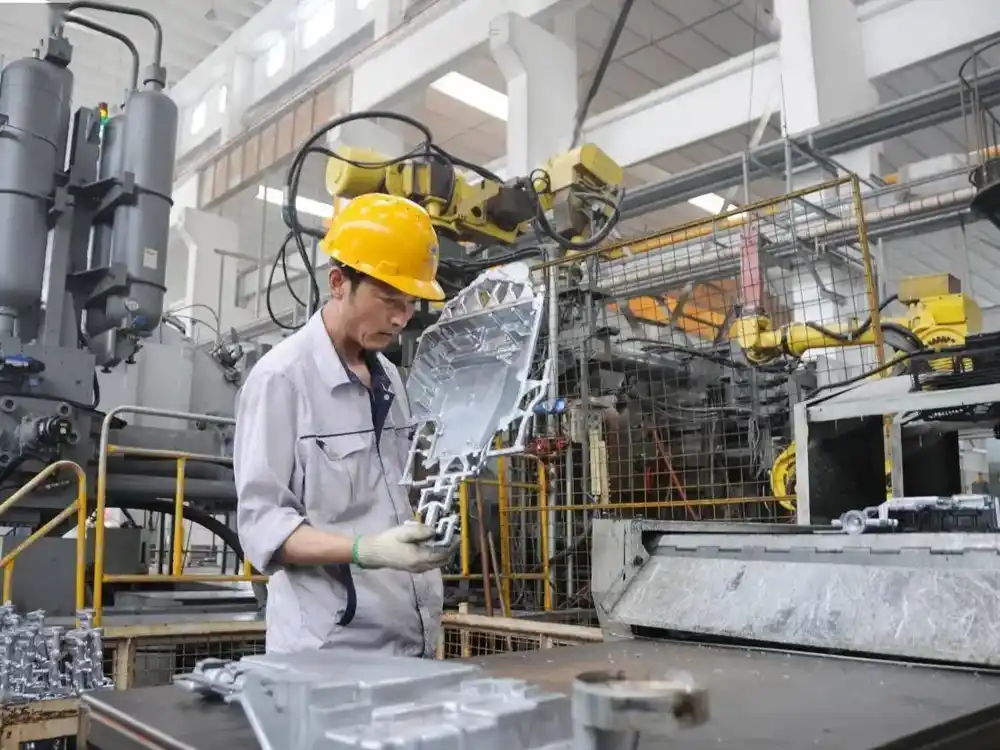
Die Casting Capabilities for Custom Metal Components
Die casting combines reusable metal tooling with controlled metal injection to produce repeat components with complex geometry, integrated features and consistent part form.
Alloy selection, part structure, tooling design and expected production quantity are reviewed together to determine the most suitable casting route for each project.
Aluminum Die Casting
Aluminum die casting is suitable for lightweight structural, housing and mechanical components requiring complex shapes, integrated ribs, bosses and other functional features.
Zinc Die Casting
Zinc alloys can support compact components with detailed geometry, defined edges and integrated functional features for mechanical, hardware and enclosure applications.
Complex Geometry & Integrated Features
Die casting can combine ribs, bosses, cavities, mounting features and shaped walls within one component, reducing the need for separate fabricated or assembled elements.
Custom Tooling & Repeat Production
Dedicated die tooling is developed around the approved component geometry and expected production volume to support stable repeat casting across ongoing production runs.
Alloy, wall structure, part size, draft, tooling design, machining requirements and expected production volume should be reviewed together before the die casting process is confirmed.
Materials and Design Requirements for Die Cast Components
Alloy selection, wall structure and part geometry all influence die filling, cooling, ejection and the final condition of a die cast component.
Features such as wall transitions, ribs, bosses, draft angles, parting direction and machining areas should be reviewed before tooling is finalized.
Materials Commonly Used for Die Cast Parts
Widely used for housings, brackets, covers and structural components where low weight, corrosion resistance and integrated geometry are important.
Suitable for compact components requiring detailed geometry, defined features and repeat production with good dimensional consistency.
Final alloy choice should consider mechanical requirements, corrosion exposure, part size, geometry, finishing needs and any secondary machining operations.
Alloy and casting condition should be reviewed together with coating, plating, passivation, painting or other required surface treatments.
Part Features That Affect the Casting Route
Wall structure should be reviewed for balanced filling and cooling, with abrupt thickness changes minimized where practical.
Suitable draft should be considered on walls, ribs, bosses and other features that must release reliably from the die.
Structural features should be proportioned and connected with suitable transitions to support part strength and casting stability.
Parting lines, undercuts, side actions and feature orientation influence die structure and should be reviewed during tooling development.
Bearing seats, sealing faces, threaded features and other precision areas should be identified where secondary CNC machining is required after casting.
Final die design should be based on the complete part drawing, selected alloy, wall structure, draft, parting direction, ejection, machining requirements and expected production volume.
From Die Casting Tooling to Finished Metal Parts
Die casting production extends beyond the casting cycle itself. Tooling setup, trimming, secondary machining, surface finishing and inspection should be coordinated around the final component requirements.
Reviewing the complete manufacturing route before repeat production helps control casting geometry, machined interfaces, functional surfaces and the final condition required for assembly or shipment.
Die configuration, parting direction, gates, vents, ejection and process setup are prepared around the approved part geometry and selected alloy.
Molten alloy is introduced into the die under controlled process conditions to form the required component geometry and integrated features.
Gates, runners, flash and excess material are removed before the casting proceeds to further machining or finishing.
CNC machining can be applied to sealing faces, bearing seats, holes, threads and other critical features requiring tighter dimensional control than the as-cast condition.
Coating, plating, passivation, painting or other specified finishing processes can be coordinated according to alloy, appearance and service requirements.
Finished parts are checked against confirmed dimensional, casting, machining and surface requirements before protective packaging and shipment.
Tooling, casting conditions, trimming, machining areas and surface finishing should be reviewed together before repeat production is released.
Inspection and Functional Testing for Die Cast Parts
Die cast components should be checked against confirmed dimensional, casting and functional requirements before they proceed to assembly or shipment.
Inspection methods can combine dimensional measurement, visual review, machined-feature verification and application-specific functional testing according to the part and its final use.
Critical dimensions, datum relationships, mounting locations and overall part geometry can be checked against the approved drawing and inspection plan.
Cast surfaces, edges, trimmed areas and visible features can be reviewed for flash, damage and other conditions that may affect assembly or finishing.
Holes, threads, sealing faces, bearing seats and other CNC machined features can be verified where tighter dimensional control is required after casting.
For sealed housings, fluid passages and pressure-related components, leak or air-tightness testing can be applied where the application requires functional sealing verification.
Inspection methods should follow the confirmed drawing, critical dimensions, machined interfaces, casting requirements and functional needs. Leak testing is applied only where sealing performance is part of the component specification.
Typical Die Cast Metal Parts We Support
Die casting is commonly used for repeat-production components requiring integrated ribs, bosses, mounting features, cavities and other functional geometry within a single metal part.
Parts can be supplied in the as-cast condition or coordinated with secondary CNC machining, deburring, surface finishing and inspection according to the final application.
Housings & Enclosures
Die cast housings and enclosure bodies with integrated walls, ribs, bosses, mounting points and internal cavities for mechanical or electronic assemblies.
Brackets & Mounting Bodies
Structural and mounting components combining shaped walls, reinforced sections, locating features and machined interfaces within one cast part.
Covers & End Plates
Cast covers, end plates and closure components with mounting holes, sealing areas, ribs and shaped external surfaces for mechanical assemblies.
Heat Sinks & Thermal Parts
Aluminum die cast components with fins, mounting features and integrated structure for applications where heat dissipation and compact geometry are important.
Motor, Gearbox & Mechanical Bodies
Die cast bodies for mechanical assemblies requiring bearing seats, mounting interfaces, internal cavities and other features that may receive secondary machining.
Sealed & Flow-Control Housings
Cast housings with machined ports, sealing faces and internal passages where dimensional verification and leak testing may be required by the application.
These examples are representative rather than limiting. Custom die cast components can be reviewed from drawings or CAD files according to alloy, geometry, tooling requirements, machining areas, expected production volume and required surface finishing.
What to Send for a Die Casting Quote
A clear drawing or CAD model together with alloy, quantity, machining requirements and functional specifications helps us review the casting route, tooling concept and downstream operations.
For repeat-production projects, expected order volume and annual demand should also be provided so tooling and production planning can be evaluated appropriately.
Provide the latest 2D drawing, 3D model or other available technical documentation showing the finished component geometry.
Specify the required alloy or identify the mechanical, corrosion, weight or finishing requirements that influence material selection.
Identify sealing faces, bearing seats, threaded holes, mounting interfaces and other features requiring tighter dimensional control or secondary CNC machining.
Provide initial order quantity, repeat-order expectations and estimated annual demand so tooling investment and production planning can be reviewed correctly.
Identify sealing, pressure, leak-testing, assembly or other functional requirements that should be considered during casting, machining and inspection planning.
Specify coating, plating, passivation, painting, cosmetic requirements, inspection documents, packaging or other project-specific conditions.
Tooling cost and casting strategy depend on alloy, part geometry, wall structure, draft, parting direction, machining allowance, expected production volume and final functional requirements.
Need a Die Casting Quote?
Send us your drawing or CAD model together with alloy, quantity, critical dimensions, machining requirements, functional testing needs and any required surface finishing.
We can review the part geometry, tooling approach, casting route and downstream processing before preparing a quotation for your project.
Send Your Die Casting Requirements
Drawings, alloy requirements and expected production volume help us evaluate tooling, machining and finishing requirements more accurately.
Request a Quote